Theo Brooks · 20 September 2026
Examining Maintenance Protocols and Inspection Schedules for Secure Key Deposit Systems in Public Buildings
Secure key deposit systems in public buildings serve as critical access points for emergency responders, and maintenance protocols focus on ensuring operational reliability through regular cleaning, component checks, and environmental protection measures. These systems typically include locked boxes that hold building keys, and protocols require facility managers to verify that seals remain intact while locks function without resistance after exposure to temperature fluctuations or moisture. Research from building safety agencies shows that consistent application of lubrication to moving parts prevents corrosion, particularly in coastal or industrial areas where salt or pollutants accelerate wear.
Core Maintenance Protocols
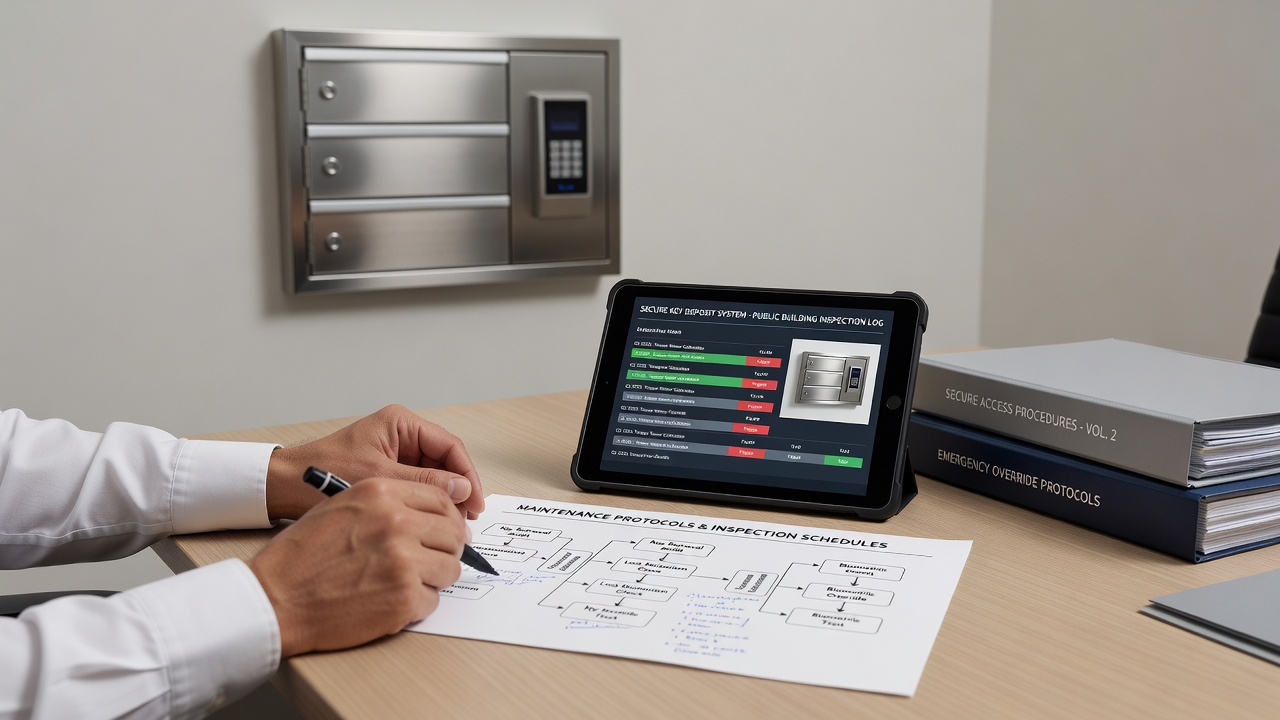
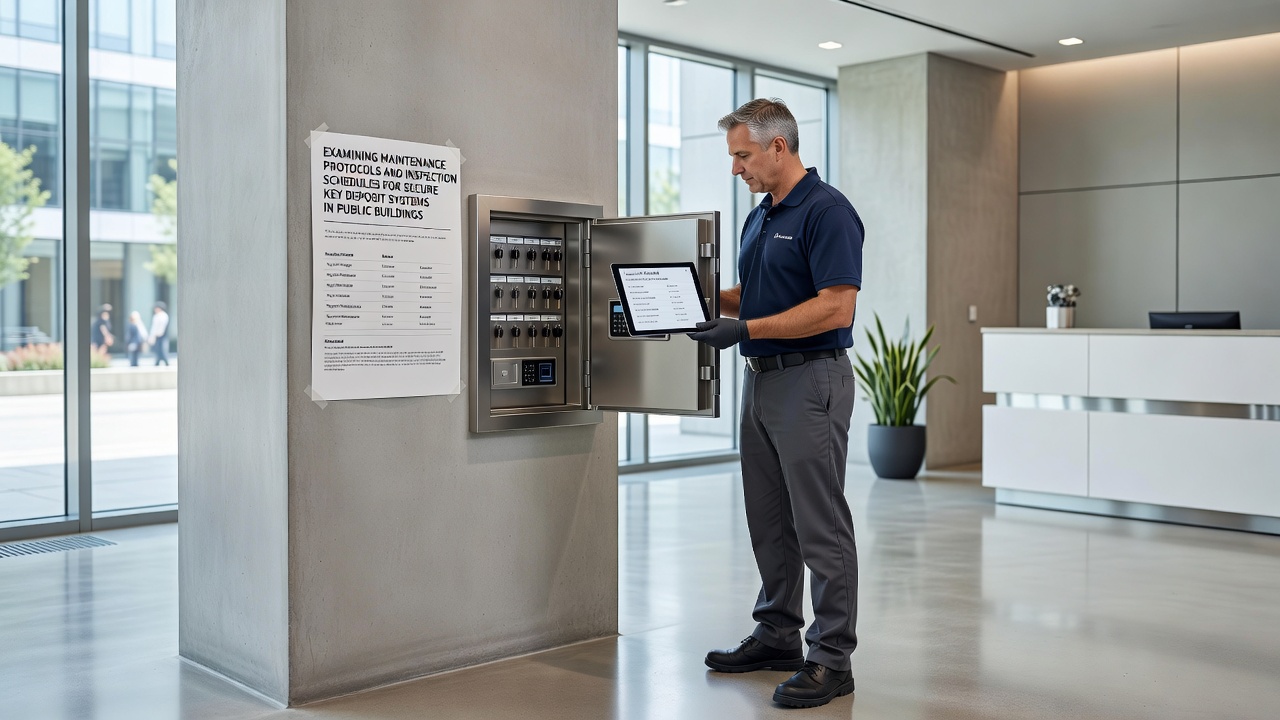
Protocols emphasize scheduled tasks that address both mechanical integrity and access security, so technicians begin by inspecting the exterior housing for dents or unauthorized modifications before moving to internal components. They test the locking mechanism with authorized keys during each visit, document any resistance encountered, and replace worn cylinders immediately to avoid delays during actual emergencies. Data from facility management reports indicate that combining visual inspections with functional tests reduces failure rates, while weatherproof gaskets receive replacement on a fixed cycle to maintain protection against water ingress and dust accumulation.
Additional steps involve logging access events and cross-referencing them against authorized personnel records, which helps identify patterns of use that might signal tampering or excessive wear. In high-traffic public structures such as hospitals and government offices, protocols also require verification that the deposit box remains clearly marked and unobstructed by signage or vegetation, ensuring quick location by first responders.
Inspection Schedules and Frequency Guidelines
Inspection schedules follow a tiered approach where daily visual checks by on-site staff confirm that the system appears undisturbed, while monthly detailed examinations cover mechanical operation and seal condition. Quarterly reviews incorporate environmental assessments that account for seasonal changes, and annual audits involve full disassembly and recalibration performed by certified technicians. Observers note that aligning these schedules with broader building maintenance calendars improves efficiency, as shared downtime periods allow multiple systems to receive attention without disrupting operations.
Standards from the National Fire Protection Association outline baseline intervals that many jurisdictions adopt, yet local adaptations often extend or shorten frequencies based on building age and usage intensity. Figures from Canadian building authorities reveal that properties following combined monthly and annual cycles experience fewer access failures during simulated emergency drills compared with those relying solely on annual checks.
Regulatory Updates and Regional Practices
Regulatory frameworks continue to evolve, and updates scheduled for September 2026 will introduce enhanced documentation requirements for digital logging of inspections in certain jurisdictions. These changes aim to create traceable records that integrate with broader facility management software, allowing authorities to review compliance across multiple sites more efficiently. Australian Standards for building access hardware already require similar record-keeping, and comparisons show that regions with mandatory digital logs report higher adherence rates to inspection timelines.
European directives on public building safety further emphasize third-party verification for systems in structures exceeding certain occupancy thresholds, creating an additional layer of accountability. Technicians in these regions often coordinate with local fire services to conduct joint inspections that validate both the deposit system and surrounding emergency access routes simultaneously.
Implementation Examples Across Facility Types
One municipal courthouse implemented a protocol that pairs weekly staff checks with quarterly specialist visits, resulting in documented reductions in response times during annual drills. Another case involved a university campus where maintenance teams integrated key deposit inspections into existing HVAC schedules, which streamlined resource allocation and ensured that remote buildings received attention even during low-occupancy periods. Such approaches demonstrate how protocols adapt to operational realities while maintaining core safety objectives.
Training for personnel forms another component, as staff must understand how to report anomalies without attempting repairs that could compromise the system. Programs developed by industry groups provide standardized modules that cover both mechanical troubleshooting and regulatory compliance, helping facilities maintain consistent standards across different teams and shifts.
Conclusion
Maintenance protocols and inspection schedules for secure key deposit systems combine routine mechanical checks with environmental safeguards and regulatory alignment to support reliable emergency access. Organizations that integrate these practices into wider facility management workflows achieve measurable improvements in system readiness, and upcoming changes effective in September 2026 will further standardize documentation across multiple regions. Continued attention to these procedures ensures that public buildings remain prepared for situations where rapid key retrieval determines outcomes.