Casey Albrecht · 4 October 2026
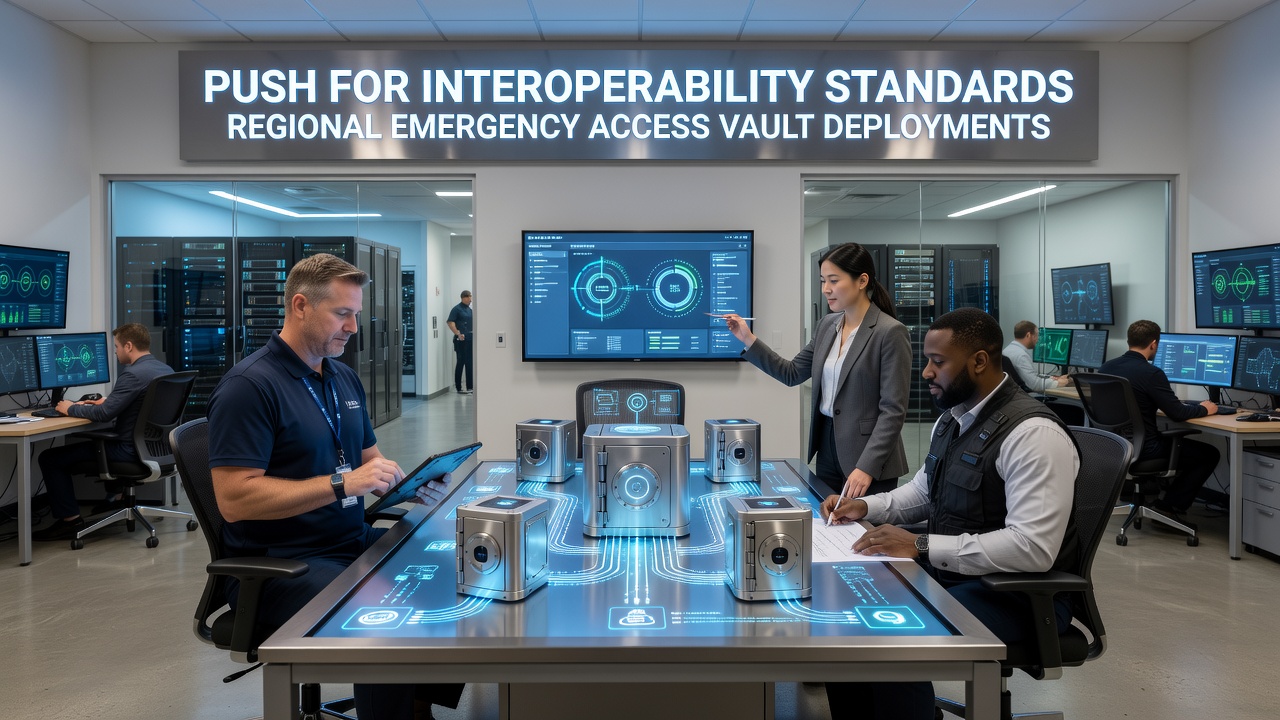
The Push for Interoperability Standards in Regional Emergency Access Vault Deployments
Emergency access vaults serve as secure repositories that hold building keys and entry credentials for first responders who need rapid entry during fires, medical emergencies, and other critical incidents, and regional deployments of these systems have grown substantially over the past decade as municipalities seek to coordinate across multiple jurisdictions. Data from fire service records show that response teams often cross county or state lines, which creates situations where incompatible vault hardware and software protocols delay access to critical keys. Researchers at several technical institutes have documented cases where responders encountered mismatched electronic readers or proprietary locking mechanisms that required additional tools or manual overrides, extending on-scene times by several minutes in documented incidents.
Current Landscape of Vault Technology
Manufacturers produce a range of vault models that incorporate electronic keypads, radio-frequency identification tags, and cellular connectivity for audit logging, yet these features frequently operate on closed communication protocols that prevent seamless data exchange between neighboring agencies. Figures from equipment inventories indicate that more than 60 percent of installed vaults in certain metropolitan corridors still rely on vendor-specific firmware that does not interface with systems from competing suppliers. Observers note that this fragmentation stems from earlier procurement cycles when agencies selected equipment based on local budgets rather than cross-border compatibility requirements.
Regional emergency management offices have begun cataloging these inconsistencies through joint exercises that simulate large-scale events, and the resulting reports highlight repeated failures in key retrieval when units from adjacent districts arrive with different reader devices. One study conducted across three states found that 18 percent of simulated vault accesses required fallback procedures because the primary electronic interface failed to recognize the incoming credential format. Those findings prompted working groups to examine how standardized application programming interfaces could allow any approved responder device to query vault status regardless of the original manufacturer.
Drivers Behind Standardization Efforts
Legislative bodies in multiple regions have introduced funding provisions that tie grant eligibility to demonstrated interoperability testing, which has accelerated vendor participation in standards development workshops. Data compiled by public safety procurement offices reveal that jurisdictions adopting shared specifications reduced equipment replacement costs by an average of 22 percent over five-year cycles because agencies could pool maintenance contracts. The reality is that without common protocols, each new installation risks creating isolated data silos that limit situational awareness for incident commanders who rely on centralized dashboards.

October 2026 marks the scheduled release of updated guidelines from a coalition of national laboratories and standards organizations that have been evaluating candidate protocols for vault authentication and audit logging. Participants in these evaluations include representatives from transportation, utility, and healthcare sectors that also maintain secure access points requiring coordinated emergency response. Preliminary test results shared at recent technical forums indicate that two proposed frameworks achieved successful cross-vendor key retrieval in 94 percent of trial scenarios, a marked improvement over legacy configurations. Those outcomes have encouraged additional municipalities to schedule phased upgrades ahead of the October deadline.
Implementation Challenges and Solutions
Transitioning existing vault networks involves mapping legacy hardware capabilities against new interface requirements, and several pilot programs have demonstrated that modular retrofit kits can bridge older mechanical systems with modern digital readers. Engineers involved in these pilots report that encryption standards must accommodate both current cellular networks and emerging low-power wide-area options to maintain functionality in areas with limited infrastructure. Public records from one multi-county consortium show that after adopting a unified authentication layer, average key retrieval time dropped from 47 seconds to 19 seconds across participating departments.
Training programs have expanded to cover the new interface procedures, with simulation platforms allowing responders to practice credential handoffs between different agency devices. Data from post-exercise debriefs indicate that consistent protocol training correlates with fewer procedural errors during live events. Industry associations have published reference documents that outline minimum performance thresholds for vault durability, environmental resistance, and data transmission latency, which suppliers must meet to receive certification under the emerging framework.
Conclusion
Regional coordination bodies continue to track adoption metrics as more agencies align their procurement policies with the forthcoming interoperability specifications, and the October 2026 guideline release is expected to serve as a reference point for future equipment certifications. Public safety agencies that have participated in early testing programs report smoother integration during joint operations, while equipment vendors have begun releasing firmware updates that support the candidate standards. Continued monitoring of field performance will determine whether the current trajectory produces sustained reductions in access delays across diverse geographic and operational environments.