Casey Albrecht · 6 September 2026
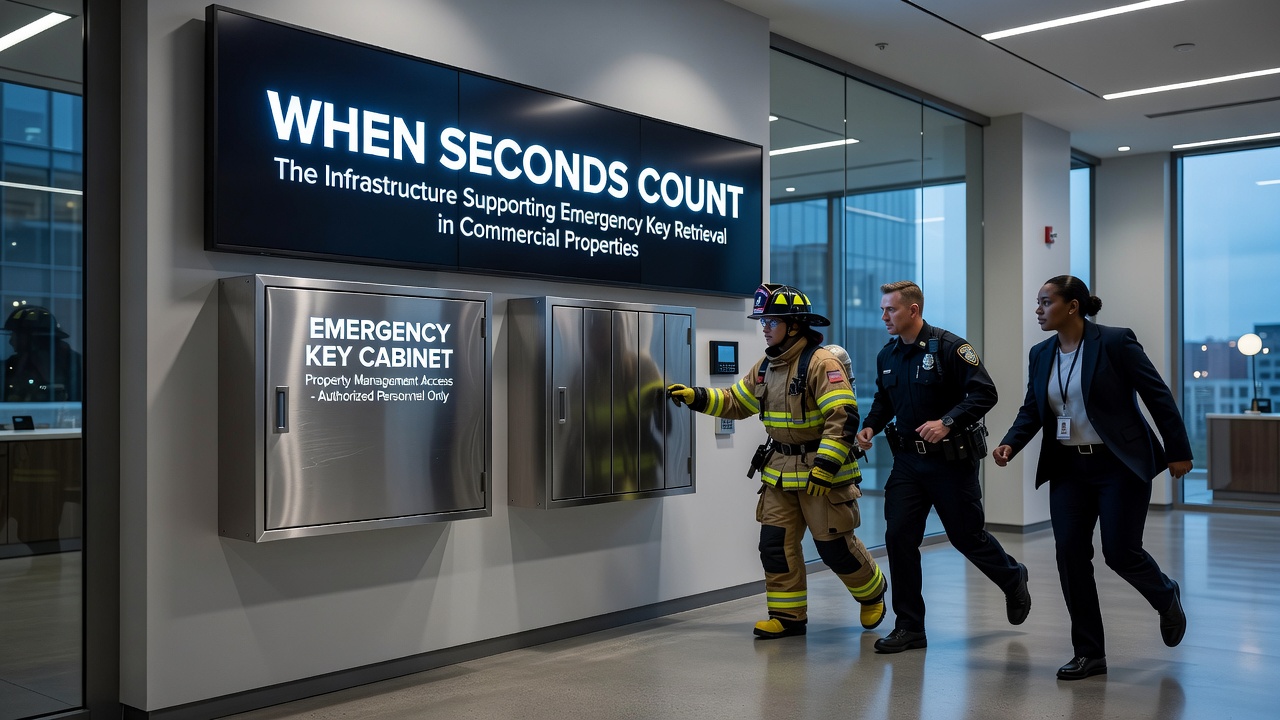
When Seconds Count: The Infrastructure Supporting Emergency Key Retrieval in Commercial Properties
Commercial properties face unique challenges when emergency responders need immediate building access, and the supporting infrastructure has evolved to address those demands through standardized key retrieval systems that integrate physical hardware with digital oversight. Data from fire safety organizations shows that rapid entry tools reduce average response delays by measurable margins in multi-story structures, where locked perimeters often stand between teams and critical intervention points.
Core Components of Rapid Access Networks
Key vaults form the foundation of this infrastructure, with models designed for commercial use featuring tamper-resistant steel construction and electronic locking mechanisms that respond to authorized codes or master keys held by local fire departments. These units mount externally near main entrances or loading docks, allowing crews to bypass delays from broken windows or forced entries that might otherwise compromise building integrity. Research indicates that properties equipped with such vaults experience fewer structural damages during incidents because responders gain controlled entry points without additional tools.
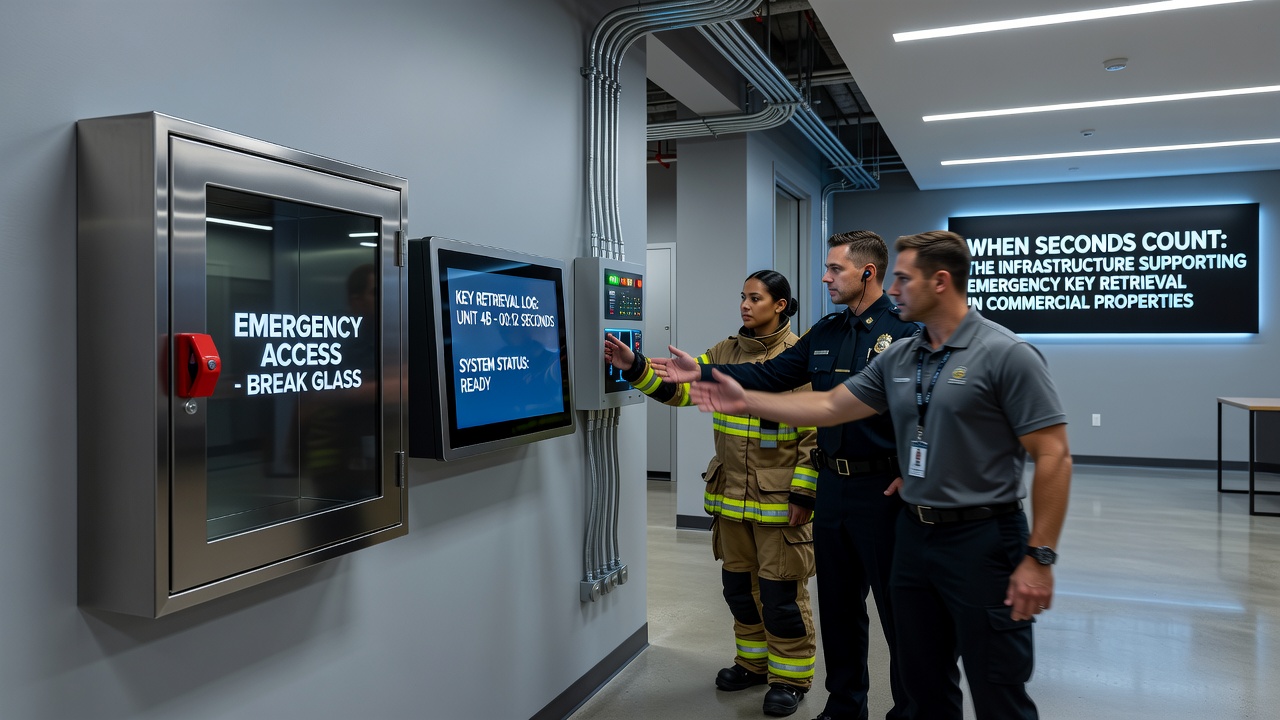
Integration extends beyond standalone boxes to include connections with building management systems that log access events and transmit alerts to monitoring centers, creating audit trails that help property managers review incidents after the fact. In larger campuses, centralized databases track which responders hold updated keys while maintaining compliance records that align with regional building codes.
Electronic Enhancements and Data Protocols
Modern setups incorporate wireless sensors and RFID readers that verify responder credentials before releasing keys, reducing risks associated with lost or duplicated physical copies. Observers note that these electronic layers operate alongside traditional mechanical backups, ensuring functionality even when power or network connectivity fails during an event. Studies from building technology institutes reveal that hybrid systems maintain operational reliability rates above 98 percent across varied climate conditions.
Communication protocols link these devices to dispatch centers, where real-time status updates help coordinate multi-unit responses, and September 2026 brings scheduled enhancements to several North American fire codes that emphasize expanded digital logging requirements for commercial key infrastructure. Those updates will require properties to demonstrate compatibility with updated responder authentication standards, prompting many facilities to upgrade older mechanical-only installations.
Standards and Regional Implementation
Guidelines from the National Fire Protection Association outline placement specifications that prioritize visibility and accessibility while maintaining security against unauthorized tampering, and similar frameworks appear in Canadian and Australian building regulations that address high-rise and industrial sites. Property owners coordinate with local fire prevention bureaus to select vault models that match department equipment, avoiding mismatches that could slow operations at critical moments.
Training programs for facility staff emphasize proper key rotation schedules and system testing intervals, with data showing that quarterly inspections correlate with fewer access failures during actual emergencies. International trade groups have compiled case compilations from European installations where integrated key systems reduced average entry times by up to 40 percent compared with non-equipped structures.
Maintenance and Long-Term Reliability Factors
Weatherproofing and corrosion resistance play direct roles in system longevity, particularly in coastal or industrial zones where salt air or chemical exposure accelerates component wear. Maintenance contracts typically include annual battery replacements for electronic units and physical inspections that verify seal integrity around mounting points. Figures from insurance industry reports link consistent upkeep to lower claim frequencies following fire or medical events.
Scalability allows these networks to expand as properties add new wings or tenant spaces, with modular designs that accept additional vaults without requiring full system overhauls. Coordination between property managers and emergency services ensures that key updates propagate quickly when personnel changes occur at either end.
Conclusion
The infrastructure supporting emergency key retrieval in commercial properties combines physical security hardware, electronic verification layers, and regulatory alignment to deliver consistent performance when timing matters most. Ongoing code developments, including those effective in September 2026, continue to shape how these systems evolve while regional standards maintain focus on responder compatibility and record-keeping accuracy. Properties that maintain current installations benefit from streamlined coordination with local departments, supporting faster intervention across diverse building types and locations.